About 356 minutes
The American Joe Miller: A Collection of Yankee Wit and Humor — Inside the Classic
Fantasy Juvenile Worlds
81,814 recorded words. 8 minutes difference from this book's estimate.
View Gutenberg source #43996
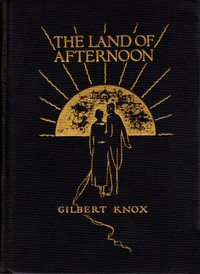
The Land of Afternoon: A Satire — Inside the Classic can be approached with a clearer sense of reading commitment from its source measurements: 83,614 words, 6 hr 4 min estimated reading time, and 9 detected text sections.
The text analysis averages about 14.7 words per sentence, while the detected sections provide another way to judge how the source is divided.
Project Gutenberg metadata also associates the work with “Canada -- Fiction,” connecting these edition facts with the source record’s subject description.
Explore this collection
These alternatives are selected using recorded categories and estimated reading time.
About 356 minutes
Fantasy Juvenile Worlds
81,814 recorded words. 8 minutes difference from this book's estimate.
View Gutenberg source #43996About 302 minutes
Fantasy Juvenile Worlds
69,351 recorded words. 62 minutes difference from this book's estimate.
View Gutenberg source #37430About 295 minutes
Fantasy Juvenile Worlds
67,842 recorded words. 69 minutes difference from this book's estimate.
View Gutenberg source #41532Search stored excerpts and compare books → Choose by your preferences →
Choices use stored catalog measurements. Estimates vary with reading speed. A shared category is a catalog label, not a claim that two books have the same argument or literary quality.
Search reads excerpt text stored with this catalog and links to its associated Gutenberg record. The connection is stored in the site database; this tool does not recheck that every excerpt is word-for-word identical to that external record. Excerpt search does not cover every chapter and does not verify historical publication dates.
Catalog snapshot checked: 2026-09-26. Coverage: 100 public books, 100 available source excerpts.
Calculated from edition completeness, EPUB availability, text structure and catalogue metadata. Not a user rating.
Total of 100 points, scaled to a 2.5-5.0 range. Editions with an empty description or a missing EPUB file are not scored.
Public-domain source text
The source text is kept in the dedicated reader, separate from this catalogue record and its commentary.
Gilbert Knox's The Land of Afternoon: A Satire opens with a scene of precise, uncomfortable detail: Marjorie Dilling stands apart from a crowd at Byward Market, shivering in the bitter cold, unable to push and jostle like the others. The narrator's eye lingers on the 'tower of frozen beef' and 'rigid hogs' trundled by their hind legs, a description that blends the grotesque with the mundane. This early passage establishes a pattern of observation that is both detached and sharply critical, setting the stage for a satire that works through accumulation of social detail rather than overt moralizing.
Knox's word choices often carry a double edge. In the market scene, the snow is 'powdery' and the wind 'bitter,' but the real sting comes from the narrator's observation that Marjorie 'simply could not bring herself to push and jostle as the other women did.' The verb 'jostle' suggests not just physical crowding but a moral compromise. Later, when describing Dr. Prendergast's patent medicine, Knox writes that 'aliment' merged into 'ailment' through 'sapient advertising and the deplorable ignorance of English by the people who speak it.' The irony is layered: the doctor's product is a fraud, but the satire also targets the public's gullibility and the corruption of language itself. Knox's diction is consistently precise, favoring concrete nouns and active verbs that ground his critique in observable behavior.
The dinner-party conversation in Chapter 1 reveals character through speech patterns. Mrs. Leeds, the 'pale little creature,' delivers a monologue about a bridge hand with obsessive detail: 'I declared no trump. Though weak in spades I had every suit protected.' Her language is technical, self-justifying, and oblivious to her listener's boredom. Barrington, her husband, responds with polite lies—'Perfectly,' 'Rotten luck'—while inwardly wondering 'What the devil is this we are eating?' The gap between spoken words and private thoughts is a recurring device. Mrs. Prendergast, by contrast, has 'no opinions of her own' and merely echoes her husband's oracles. Knox uses dialogue not to advance plot but to expose the rituals of social performance, where bridge hands and patent medicines become props for status and self-deception.
Knox's descriptions are economical but telling. Dr. Prendergast is 'a generous-waisted gentleman whose talents exercised themselves in the field of proprietary medicine.' The phrase 'generous-waisted' is a physical correlative to his moral and intellectual bulk. His wife is 'the simplest person to entertain' because she has no conversation beyond her husband's virtues. The narrator's tone is cool, almost clinical, but the accumulation of such details creates a cumulative effect of absurdity. The market scene, with its 'stiff fringe of poultry and rabbits strung across the ends of the wagons,' is rendered with a naturalist's eye for the unglamorous. Knox avoids overt commentary, letting the incongruities—a woman bewailing bridge losses while her husband endures a tedious dinner—speak for themselves.
The novel's three-part structure—'They Came,' 'They Saw,' 'They Conquered'—is announced in the table of contents, echoing Julius Caesar's boast but undercutting it with the epigraph from Tennyson's 'The Lotus-Eaters': 'In the afternoon they came unto a land / In which it seemed always afternoon.' This framing suggests a satirical inversion: the Canadian setting becomes a land of enervating stasis, not conquest. The foreword further complicates the reader's expectations by insisting that all characters are 'purely imaginary' while acknowledging the novel is 'frankly intended to be a satire upon some phases of social and political life in Canada.' Knox's protagonist, Raymond Dilling, is presented as a moral counterweight to the 'unpleasant minor types,' but the excerpts offer only glimpses of him. The structure invites readers to watch for how the promised satire unfolds across the three parts.
Readers approaching The Land of Afternoon should attend to the interplay between Knox's detached narration and the characters' self-absorbed speech. The satire works through accumulation—of social detail, of verbal tics, of physical description—rather than through plot twists. The foreword's disclaimer about imaginary characters is a conventional gesture, but the specificity of the Byward Market setting and the patent-medicine subplot root the satire firmly in early twentieth-century Canada. Look for how Knox balances his critique with the 'optimistic joy' he claims in creating Dilling, and whether the promised moral firmness emerges from the surrounding folly.
Rereading the chapter on the Dillings’ drawing-room chatter, I found myself smiling at how sharply their smugness is captured. It reminded me of a phrase I once underlined long ago, about wit that lands as gently as a falling leaf, in The humour of Germany — Inside the Classic. Both books share that quiet, unassuming sting.
Use these questions to collect your thoughts before moving on.









