About 28 minutes
Mr. Jacobs: A Tale of the Drummer, the Reporter, and the Prestidigitateur — A Closer Reading
Science Fiction Utopias
6,285 recorded words. 0 minutes difference from this book's estimate.
View Gutenberg source #41125
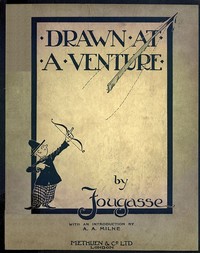
For Drawn at a Venture: A Collection of Drawings — Background and Themes, the stored edition analysis reports 6,213 words, 28 min estimated reading time, and 3 detected text sections.
The text analysis averages about 18.5 words per sentence, while the detected sections provide another way to judge how the source is divided.
Project Gutenberg metadata also associates the work with “English wit and humor, Pictorial,” connecting these edition facts with the source record’s subject description.
Explore this collection
These alternatives are selected using recorded categories and estimated reading time.
About 28 minutes
Science Fiction Utopias
6,285 recorded words. 0 minutes difference from this book's estimate.
View Gutenberg source #41125About 30 minutes
Science Fiction Utopias
6,692 recorded words. 2 minutes difference from this book's estimate.
View Gutenberg source #44662About 81 minutes
Science Fiction Utopias
18,460 recorded words. 53 minutes difference from this book's estimate.
View Gutenberg source #43419Search stored excerpts and compare books → Choose by your preferences →
Choices use stored catalog measurements. Estimates vary with reading speed. A shared category is a catalog label, not a claim that two books have the same argument or literary quality.
Search reads excerpt text stored with this catalog and links to its associated Gutenberg record. The connection is stored in the site database; this tool does not recheck that every excerpt is word-for-word identical to that external record. Excerpt search does not cover every chapter and does not verify historical publication dates.
Catalog snapshot checked: 2026-09-26. Coverage: 100 public books, 100 available source excerpts.
Calculated from edition completeness, EPUB availability, text structure and catalogue metadata. Not a user rating.
Total of 100 points, scaled to a 2.5-5.0 range. Editions with an empty description or a missing EPUB file are not scored.
Public-domain source text
The source text is kept in the dedicated reader, separate from this catalogue record and its commentary.
A. A. Milne's introduction to Drawn at a Venture immediately sets a tone of playful misdirection. He opens by listing various methods of introducing an artist—saving his life in the Bush, or expounding on one's own theories—before humorously conceding to the publisher's demand to "introduce the fellow." This self-aware framing primes the reader for the wit to follow in Fougasse's drawings.
The introduction also reveals the artist's true identity: Kenneth Bird of Morar, Inverness, a British sapper subaltern wounded at Gallipoli who adopted the pseudonym Fougasse (a type of small mine) to avoid confusion with another Punch artist named Bird. Milne's anecdote about meeting Bird on "rocking-horse crutches" in 1919 grounds the collection in a specific post-war moment, adding a layer of personal history to the comic observations.
Milne's introduction is not merely a preface but a performance in itself. He parodies the conventions of artist introductions, offering to "keep the last paragraph for him" and let the reader "turn over and take them." The humor lies in his reluctance to do what is expected, yet he ultimately delivers a concise biography: Fougasse is Kenneth Bird, a wounded veteran who sent drawings to Punch from hospital. Milne also notes the absurdity of pseudonyms, imagining a genuine M. Fougasse of Paris forced to call himself Tomkins. This playful tone mirrors the drawings' own blend of understatement and absurdity.
Milne's description of meeting Bird in 1919—"swinging slowly along with the aid of a pair of rocking-horse crutches"—is the only direct glimpse of the artist's life outside the drawings. It suggests a resilience that informs the gentle, often self-deprecating humor of the collection. Readers should approach the introduction as an integral part of the work, not a separate apparatus.
The drawings in Drawn at a Venture frequently hinge on social awkwardness and miscommunication. In one, a hotel guest asks to rent a "genuine Jacobean" bed for the night because no rooms are available, only to be told the price is 250 guineas. The humor derives from the clash between the guest's practical need and the antiquarian's commercial pitch. Another sketch shows a man greeting an acquaintance with "How small the world is, to be sure!" and receiving the reply, "Terribly small, isn't it?"—a deflation of polite cliché.
Several drawings involve mistaken identity or social roles. In "The Pugnacious Gentleman," a man calls another a 'Un' (Hun), and a peacemaker suggests it was meant "kindly-like" since the war is over. This reflects a post-war sensibility where old hostilities are awkwardly repackaged. The drawings often capture the moment when a social script fails, leaving characters in a comic impasse.
Many of Fougasse's drawings rely on dialogue to deliver the punchline, with the visual element setting the scene. In "The Journey: A Dialogue in English," a well-spoken man corrects a fellow traveler about the correct entrance, using elaborate politeness: "I trust you'll excuse me mentioning it, my good fellow." The humor lies in the contrast between the formal language and the trivial correction. Similarly, in "The Spread of Education," a fisherman dismisses another's technique with "you'll never catch anything like that," only to receive the reply, "No—dare say not—get away from most of the midges, though." The retort subverts the expected defense of skill with a practical, anti-climactic justification.
Another drawing features a professor ignoring his wife's news about burst pipes to correct her annually repeated error about frost versus thaw. The humor is in the pedantic insistence on factual accuracy over immediate concern. These dialogues showcase Fougasse's ear for the rhythms of British speech and the comedy of misplaced priorities.
As a collection of drawings, Drawn at a Venture demands attention to the interplay between image and text. The captions are often essential to the joke, but the visuals provide context and character. In "The Bargain," a drawing shows a practitioner called away from a children's party to attend a patient, leaving behind a scene of chaos. The caption is minimal, relying on the viewer to infer the mishap. In "A Use for Modern Art," the title itself sets up the joke, with the drawing likely depicting an unconventional application of an artwork.
Fougasse's line work is described by Milne as having a "Gallic style," though the subjects are distinctly British. The drawings are economical, using simple lines to convey posture and expression. Readers should examine how the visual elements—facial expressions, body language, and setting—complement or contrast with the dialogue. The absence of shading or detail focuses attention on the comic situation.
Reading Drawn at a Venture is best done in small doses, allowing each drawing its moment. The collection rewards attention to the nuances of social interaction and the precise timing of the captions. Milne's introduction, while humorous, also provides a key to understanding the artist's background and the post-war context that shapes the humor. Approach the book as a series of vignettes that capture the absurdities of everyday life in early 20th-century Britain, with a gentle, knowing wit.
I keep thinking about how Fougasse’s drawings catch those tiny, awkward social moments we all recognize but never name. It reminded me of flipping through More toasts: Jokes, stories and quotations — Reading Notes late one evening, the way certain jokes land softly, not loud, and stay with you like a familiar room. That quiet recognition feels the same.
Create a short personal record of your experience with this book.









