About 82 minutes
An Apology for the Life of Mrs. Shamela Andrews — Reading Notes
Science Fiction Utopias
18,695 recorded words. 1 minutes difference from this book's estimate.
View Gutenberg source #30962
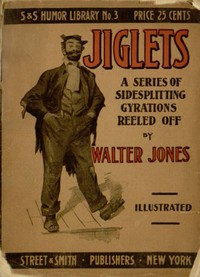
For Jiglets: A series of sidesplitting gyrations reeled off— — Inside the Classic, the stored edition analysis reports 18,460 words, 1 hr 21 min estimated reading time, and 4 detected text sections.
The text analysis averages about 13.9 words per sentence, while the detected sections provide another way to judge how the source is divided.
Project Gutenberg metadata also associates the work with “American wit and humor,” connecting these edition facts with the source record’s subject description.
Explore this collection
These alternatives are selected using recorded categories and estimated reading time.
About 82 minutes
Science Fiction Utopias
18,695 recorded words. 1 minutes difference from this book's estimate.
View Gutenberg source #30962About 82 minutes
Science Fiction Utopias
18,642 recorded words. 1 minutes difference from this book's estimate.
View Gutenberg source #43534About 83 minutes
Science Fiction Utopias
19,025 recorded words. 2 minutes difference from this book's estimate.
View Gutenberg source #47718Search stored excerpts and compare books → Choose by your preferences →
Choices use stored catalog measurements. Estimates vary with reading speed. A shared category is a catalog label, not a claim that two books have the same argument or literary quality.
Search reads excerpt text stored with this catalog and links to its associated Gutenberg record. The connection is stored in the site database; this tool does not recheck that every excerpt is word-for-word identical to that external record. Excerpt search does not cover every chapter and does not verify historical publication dates.
Catalog snapshot checked: 2026-09-26. Coverage: 100 public books, 100 available source excerpts.
Calculated from edition completeness, EPUB availability, text structure and catalogue metadata. Not a user rating.
Total of 100 points, scaled to a 2.5-5.0 range. Editions with an empty description or a missing EPUB file are not scored.
Public-domain source text
The source text is kept in the dedicated reader, separate from this catalogue record and its commentary.
Walter Jones's Jiglets opens with an unusual disclaimer: the illustrations are “purely ornamental” and not keys to the jokes, comparing them to the filigree on a lemon meringue pie. This self-aware framing sets the tone for a collection that revels in its own silliness. The narrator, a stage performer, immediately breaks the fourth wall, expressing astonishment at an audience of eleven and thanking a man in the front row for his hair. The humor relies on rapid-fire puns (Hamlet, Egglet, Eyelet, Omelet, To Let) and exaggerated misfortune, such as walking railroad ties of inconsistent spacing and complaining about non-union labor. The excerpts suggest a loose, anecdotal structure rather than a plotted narrative.
The excerpts present a first-person narrator who is both a performer and a hapless everyman. He claims to have toured New England with a Shakespearean company, playing roles that include Hamlet and the punning variants Egglet, Eyelet, Omelet, and To Let. His complaints about unpaid salary and a manager who flees to a sick friend in New York are delivered with deadpan exaggeration. The narrator's voice is colloquial and self-deprecating: he admits he wouldn't have thought himself an actor either, “if I didn't know to what extremes a man of my attainments may be driven, when his bread-basket is empty.” This persona recurs throughout the excerpts, addressing the audience directly and weaving personal anecdotes into the comedy.
Jones relies heavily on puns and verbal gags that build on each other. The Hamlet sequence is a chain: playing Hamlet leads to an Egglet in the Eyelet, saved up to make an Omelet, which causes a disturbance and results in the room being To Let. Similar wordplay appears in the story of Willie, whose trousers are galvanized after a crap game, leading his father to demand a can opener for a spanking. The humor often depends on literalizing metaphors or extending a joke to absurd lengths, as when Willie's father telegraphs police and the chief asks for identifying marks: “N-o-o! But confound him, just let me get a hold of him and he will have.” These gags are structured as punchlines to extended setups, typical of stage monologue.
Two recurring motifs in the excerpts are financial hardship and mischievous children. The narrator's acting tour ends in a small Maine town where the show goes bust, leaving him to walk railroad ties. Later, a friend's son Willie loses his wages gambling, gets his trousers galvanized, and eventually runs away to a farm, where he advises his father to join him and “make a few million growing wheat for the food trust.” Another boy genius avoids thirty-four school examinations and tricks his parents with an electric light. These anecdotes share a tone of wry acceptance: misfortune is inevitable, and the clever or stubborn survive through wit. The humor is gentle, never bitter, and the narrator remains an amused observer of his own bad luck.
The excerpts from Jiglets offer only a portion of the full collection, but they reveal a consistent comic voice rooted in stage performance. Readers should expect a series of loosely connected anecdotes rather than a continuous story. The humor is verbal and situational, often turning on puns or the narrator's deadpan reactions to absurd events. The book's self-aware preface—warning that illustrations are decorative, not explanatory—invites readers to enjoy the jokes on their own terms, without expecting diagrams or keys.
There’s a particular ache in leafing through Jiglets—that old, self-mocking vaudeville spirit, the jokes that knew they were silly and told them anyway. It reminds me of the quieter, slyer warmth in Literary Lapses — Inside the Classic, where the humor doesn’t shout so much as nudge. Both feel like letters from a friend who’s simply glad you’re still here to laugh.
Capture what you thought, learned, and would like to remember.









