
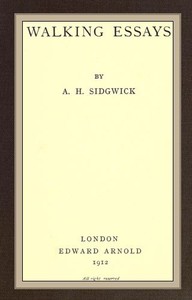
Walking essays by Arthur Sidgwick
Published in 1879, Walking Essays is exactly what it sounds like: a series of reflective pieces born from the simple act of putting one foot in front of the other. Arthur Sidgwick—a classics scholar and brother to the more famous philosopher Henry—didn't write a travelogue. He wrote about what happens to your thoughts when your body is in motion through the English countryside.
The Story
There's no plot in the traditional sense. Think of each essay as a companion on a different walk. One moment, Sidgwick is marveling at the practical joy of a well-paced stroll. The next, he's tumbling into deep reflections on why we make friends, how nature fuels creativity, or what it means to be truly educated. He argues with imaginary companions, quotes poets like Wordsworth, and constantly questions his own opinions. The 'story' is the journey of a curious mind, using the rhythm of walking to untangle life's big and small questions. It's less about the destination and all about the mental scenery along the way.
Why You Should Read It
This book is a surprising breath of fresh air. In our world of notifications and non-stop noise, Sidgwick's voice is a calm, intelligent reminder of a different pace. His essays feel conversational, like you're listening in on his thoughts. I loved his mix of high-minded ideas and down-to-earth humor—he's as likely to ponder philosophy as he is to complain about a poorly chosen walking stick. The themes are timeless: the search for peace, the value of real conversation, and the simple, physical joy of being outdoors. It made me want to turn off my phone and go for a long walk, just to see what my own mind might come up with.
Final Verdict
Perfect for anyone who loves nature writing, classic essays, or just needs a literary palate cleanser. If you enjoy the thoughtful rambles of writers like Robert Macfarlane or Rebecca Solnit, you'll find a kindred (if more formally dressed) spirit in Sidgwick. It's also a great pick for readers who are curious about Victorian thought but want something more personal and less dense than a major novel. This isn't a page-turner; it's a book to savor in small sections, preferably while sitting under a tree. A charming, insightful companion for quiet afternoons.
This text is dedicated to the public domain. It is available for public use and education.
Richard Wright
3 months agoThe fonts used are very comfortable for long reading sessions.
Elijah Ramirez
1 year agoThe formatting on this digital edition is flawless.
Charles Walker
1 year agoI came across this while browsing and the flow of the text seems very fluid. Truly inspiring.
Thomas Walker
2 years agoGood quality content.




Nancy Davis
6 months agoA sophisticated analysis that fills a gap in the literature.