
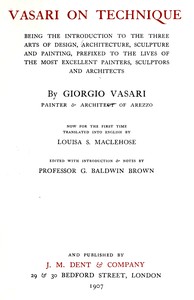
Vasari on technique : Being the introduction to the three arts of design,…
Let's clear something up right away: this isn't a story about princes or popes. The 'plot' here is the birth of a masterpiece, from the ground up. Vasari structures the book as a practical guide to the three major arts: architecture, sculpture, and painting. He starts with the raw materials—where to find the best clay, how to quarry stone, which woods are good for panels. Then, he dives into the processes. For painting, he explains the painstaking methods of fresco, tempera, and the then-new technique of oil painting. For sculpture, he talks about casting bronze and the direct carving of marble. For architecture, it's about foundations, proportions, and decoration.
Why You Should Read It
Reading this feels like you've been handed a key to a hidden workshop. The biggest thrill is the perspective. We're so used to seeing Renaissance art as untouchable perfection in museums. Vasari pulls back the curtain and shows us the sweat, the problem-solving, and the occasional happy accident that made it all possible. You start to see a painting not just as an image, but as a physical object built in layers, with choices made about rabbit-skin glue and powdered lapis lazuli. It makes the artists feel less like distant geniuses and more like incredibly skilled, practical people. You gain a whole new appreciation for their work because you understand the sheer effort and knowledge behind every brushstroke.
Final Verdict
This book is a must for anyone who loves art history but craves the 'how' behind the 'wow.' It's perfect for artists, makers, and curious readers who enjoy seeing how things are built. If you've ever visited a museum and leaned in close, wondering 'How did they DO that?'—this is your answer. It's not a casual beach read, but for the right person, it's absolutely captivating. Think of it as the ultimate DIY manual from the greatest creative period in history, written by its greatest fan.
This masterpiece is free from copyright limitations. Preserving history for future generations.
John Martinez
1 year agoBased on the summary, I decided to read it and the atmosphere created is totally immersive. I couldn't put it down.
Emma Moore
1 year agoTo be perfectly clear, the emotional weight of the story is balanced perfectly. Worth every second.

Susan Robinson
1 year agoCitation worthy content.