
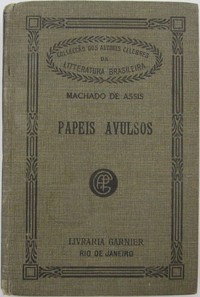
Papeis Avulsos by Machado de Assis
First off, don't let the title ('Loose Papers' or 'Scattered Papers') fool you into thinking this is a messy draft. It's a carefully crafted set of stories that all circle a central, peculiar idea.
The Story
The book doesn't have one continuous plot. Instead, it's held together by the voice of a narrator who finds a bunch of old papers. The most famous section introduces us to a councilor, a man utterly devoted to mediocrity and order. He founds a philosophical system called 'Humanitism,' which argues that true genius and extraordinary talent are actually mental illnesses. His grand plan? To identify and 'cure' these brilliant but 'sick' individuals, bringing them down to a safe, average level for the good of society. We see this idea play out in other connected sketches and character portraits, each one a short, ironic glimpse into vanity, pretense, and the quiet madness of everyday life in 19th-century Brazil.
Why You Should Read It
Machado de Assis has this incredible way of being funny and deeply cynical at the same time. He doesn't shout his critiques; he whispers them with a raised eyebrow. Reading this, you're not just getting a history lesson—you're getting a masterclass in psychological observation. The councilor isn't a cartoon villain; he's terrifying because he genuinely believes he's helping. The book asks uncomfortable questions we still grapple with: Who gets to decide what's normal? Is fitting in always a good thing? His prose is deceptively simple, pulling you in with casual charm before landing a punchline that makes you think.
Final Verdict
This is a perfect pick for readers who love sharp, ironic short stories like those by Chekhov or Gogol. If you enjoy authors who explore the darker, weirder corners of human nature with a dry wit—think a 19th-century Brazilian Kurt Vonnegut—you'll find a lot to love here. It's also great for anyone tired of straightforward plots and eager for something that plays with form and ideas. Fair warning: it's not a feel-good, action-packed romp. It's a slow-burn, intellectual snack that leaves a lasting, peculiar aftertaste.
This content is free to share and distribute. You are welcome to share this with anyone.




Thomas Jones
2 months agoImpressive quality for a digital edition.