
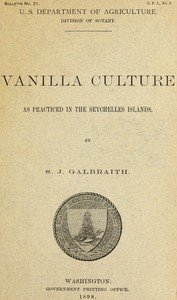
Vanilla culture as practiced in the Seychelles Islands by S. J. Galbraith
I picked up Vanilla culture as practiced in the Seychelles Islands expecting a niche history book. What I found was a quietly compelling narrative about one of the world's most labor-intensive crops. S. J. Galbraith doesn't just list facts; he walks you through the entire, painstaking process alongside the farmers who know it best.
The Story
The book doesn't have a fictional plot, but its structure follows the life cycle of the vanilla vine. It starts with the hopeful planting of a cutting, then the long, anxious wait—sometimes three to four years—for the first flowers. The heart of the story is the pollination day, a frantic, delicate operation where farmers must manually fertilize each blossom using a thorn or a sliver of bamboo. From there, we follow the green pods as they slowly grow and are eventually harvested, only to begin the mysterious 'curing' process. This involves weeks of sweating, drying, and conditioning in the sun, a ritual that transforms hard, scentless beans into the fragrant, oily strands we know. The 'characters' are the farmers, their families, and the colonial and local experts all trying to master this unpredictable plant.
Why You Should Read It
This book changed how I see the world in small ways. I'll never look at a vanilla bean the same again. Galbraith has a knack for making the technical feel human. You feel the tension of a farmer watching the weather in the weeks before harvest, knowing a single storm could ruin a year's work. The book highlights a deep respect for craft and the passing down of knowledge. It's also a snapshot of the Seychelles at a specific time, showing how global demand for a luxury item shapes a local community. It’s less about economics, though, and more about the intimate relationship between people and a plant.
Final Verdict
Perfect for curious readers who enjoy micro-histories, foodie books, or stories about traditional crafts. If you liked Salt by Mark Kurlansky or The Botany of Desire, you'll appreciate this deep dive into a single ingredient. It's also great for armchair travelers wanting to feel the sun and soil of the Seychelles. Fair warning: it's a specific topic, so it won't be for everyone. But if the idea of understanding the incredible journey behind a common flavor intrigues you, this is a hidden gem. It’s a short, focused read that packs a lot of wonder into its pages.
Legal analysis indicates this work is in the public domain. Knowledge should be free and accessible.
Elijah Martinez
2 years agoIf you enjoy this genre, the narrative structure is incredibly compelling. Worth every second.









Jessica Moore
3 months agoUsed this for my thesis, incredibly useful.