About 746 minutes
Rowlandson the Caricaturist; a Selection from His Works. Vol. 2 — Inside the Classic
Science Fiction Utopias
171,450 recorded words. 14 minutes difference from this book's estimate.
View Gutenberg source #45981
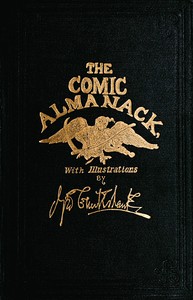
The Comic Almanack, Volume 1 An Ephemeris in Jest and Earnest, Containing Merry Tales, Humerous Poetry, Quips, and Oddities — Reading Companion can be approached with a clearer sense of reading commitment from its source measurements: 168,167 words, 12 hr 12 min estimated reading time, and 40 detected text sections.
The text analysis averages about 22.2 words per sentence, while the detected sections provide another way to judge how the source is divided.
Project Gutenberg metadata also associates the work with “English wit and humor,” connecting these edition facts with the source record’s subject description.
Explore this collection
These alternatives are selected using recorded categories and estimated reading time.
About 746 minutes
Science Fiction Utopias
171,450 recorded words. 14 minutes difference from this book's estimate.
View Gutenberg source #45981About 656 minutes
Science Fiction Utopias
150,735 recorded words. 76 minutes difference from this book's estimate.
View Gutenberg source #15338About 863 minutes
Science Fiction Utopias
198,427 recorded words. 131 minutes difference from this book's estimate.
View Gutenberg source #50401Search stored excerpts and compare books → Choose by your preferences →
Choices use stored catalog measurements. Estimates vary with reading speed. A shared category is a catalog label, not a claim that two books have the same argument or literary quality.
Search reads excerpt text stored with this catalog and links to its associated Gutenberg record. The connection is stored in the site database; this tool does not recheck that every excerpt is word-for-word identical to that external record. Excerpt search does not cover every chapter and does not verify historical publication dates.
Catalog snapshot checked: 2026-09-26. Coverage: 100 public books, 100 available source excerpts.
Calculated from edition completeness, EPUB availability, text structure and catalogue metadata. Not a user rating.
Total of 100 points, scaled to a 2.5-5.0 range. Editions with an empty description or a missing EPUB file are not scored.
Public-domain source text
The source text is kept in the dedicated reader, separate from this catalogue record and its commentary.
The Comic Almanack for 1839 opens with a mock-astrological prediction titled “Blarneyhum Ass-trologicum,” which sets the tone for the volume’s blend of jest and earnest. The author warns readers to “beware of false prophets” before launching into a satirical vision of the State Kitchen, where cooks quarrel and a “Lamb’s head” is served with strong mustard. This piece exemplifies the almanack’s method: using pseudo-scientific jargon to lampoon political and social institutions.
The volume collects nine annual issues (1835–1843), each mixing prose, verse, and Cruikshank’s illustrations. The excerpts show a recurring interest in urban misadventures, as in Thackeray’s “Stubbs’ Calendar,” where the protagonist delivers letters in London while accidentally encountering his estranged mother. The writing is dense with wordplay, topical references, and a knowing, ironic voice that assumes a reader familiar with the follies of the day.
The Comic Almanack deliberately mimics the structure of a serious almanac—with its astrological predictions, seasonal notes, and calendar entries—while subverting every convention. The “Blarneyhum Ass-trologicum” passage parodies the portentous language of real almanacs: “Unlucky planets rule the State Kitchen; and the great kettle being filled by Aquarius, with Sol in opposition, an unfriendly boil is produced.” The humor depends on the reader’s familiarity with the genre’s earnestness. By replacing celestial influence with kitchen chaos, the authors reduce grand political events to a messy stew. This hybrid form allows them to comment on current affairs under the guise of nonsense, a tactic that recurs throughout the volume.
Thackeray’s “Stubbs’ Calendar” excerpt reveals a sharp eye for class distinctions and urban anonymity. The protagonist, a postman, delivers letters in Duke Street without recognizing his own mother, who lives there as a landlady. The scene turns on a moment of misrecognition: the mother, in a “poke bonnet,” fumbles for change, and only when the son speaks does she realize who he is. The dialogue—“Law, mamma,” said I, “is that you?”—underscores the casual cruelty of a son who ignored his mother’s letters. The episode is typical of the almanack’s interest in the collisions of family and city life, where proximity does not guarantee recognition.
George Cruikshank’s illustrations are not mere decorations but integral to the almanack’s comic effect. The preliminary note describes them as “among his finest, most characteristic productions,” and the text frequently refers to visual details. In the “Blarneyhum” passage, the description of a “Lamb’s head” served with mustard, a “Jack clinging to the side,” and a “fowl” attempting escape as a “winged Cupid” is clearly meant to be seen as well as read. The interplay between word and image creates a layered satire: the text provides the political allegory, while Cruikshank’s etchings supply the grotesque, exaggerated figures that make the allegory memorable. Readers are encouraged to move between the two, each enriching the other.
The Comic Almanack rewards readers who enjoy wordplay, period satire, and the interplay of text and image. Because the excerpts are incomplete, the full range of its humor—spanning nine years and multiple authors—can only be guessed at. Approach it as a serial entertainment, best read in small doses, with attention to the running jokes and recurring characters that link one year to the next. Cruikshank’s illustrations are essential; do not skip them.
Reading these old puns and almanac quips, I remembered my grandfather’s shelf of Victorian oddities. The laughter felt familiar, but so did the ache of time passing. It reminded me of how Baboo Jabberjee, B.A. — Inside the Classic once made me pause, recognizing the same gentle irony in earnest voices. Baboo Jabberjee, B.A. — Inside the Classic left a similar quiet warmth behind.
A brief reflection can help important ideas stay with you longer.









