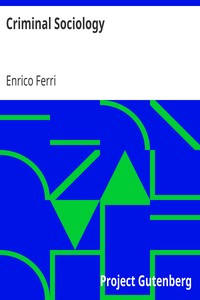
Criminal Sociology by Enrico Ferri
So, what's this book actually about? Criminal Sociology isn't a novel with a plot. Think of it as a manifesto, a passionate argument from a scientist trying to change how we see crime. Enrico Ferri, a leading figure in the 'Positivist School' of criminology, lays out his case against the classical idea that criminals are just rational people making bad choices.
The Story
The 'story' here is the journey of an idea. Ferri takes you through his evidence. He points to factors like a person's background, their economic situation, the density of their city, and even the season. He argues that crime isn't a simple moral failure, but a social symptom. The book builds his case piece by piece, showing how these external pressures limit free will and create conditions where crime becomes more likely. It's a systematic takedown of the old way of thinking, proposing instead that we should study criminals like we study any other natural phenomenon.
Why You Should Read It
I'll be honest, parts of it are dense—it's a 19th-century academic text. But the core ideas are electrifying. Reading it, you get this eerie feeling of watching the birth of modern conversations about justice. When Ferri talks about poverty and education, or critiques harsh, ineffective punishments, it echoes debates we're still having today. It's humbling and a bit frustrating to see how long these questions have been on the table. This isn't a dry history lesson; it's watching a brilliant mind connect dots in a way that was radical for its time.
Final Verdict
This book is not for everyone. If you want a fast-paced narrative, look elsewhere. But if you're a true crime fan interested in the 'why' behind the crime, a sociology or history buff, or someone working in law, social justice, or policy, this is essential reading. It's the intellectual groundwork. Think of it as a primary source that helps explain how we got here. It's perfect for curious readers who don't mind a bit of a challenge to gain a huge amount of perspective.
This publication is available for unrestricted use. It serves as a testament to our shared literary heritage.