
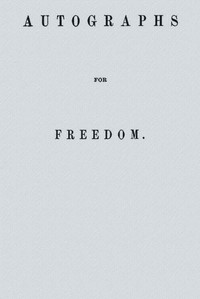
Autographs for Freedom by Julia Griffiths
Let's clear up the title first. 'Autographs for Freedom' isn't a novel with a single plot. It's a collection, a scrapbook of the anti-slavery movement put together in 1854 by Julia Griffiths. She was a key figure in Frederick Douglass's circle, helping run his newspaper. The book is exactly what it sounds like: a gathering of 'autographs' or contributions from writers, thinkers, and activists. But the 'Unknown' author credit on some versions adds a layer of intrigue. It suggests a deliberate act of collective voice over individual fame.
The Story
Think of this book as a time capsule. Julia Griffiths reached out to prominent abolitionists—both Black and white, men and women—and asked for original pieces. What she got back was a mix of essays, poems, and short stories. There are fiery speeches arguing against the Fugitive Slave Act, poignant poems about family separation, and fictional tales showing the human cost of bondage. There's no linear story. Instead, you jump from the logical arguments of a minister to the emotional plea of a mother's poem. It creates a mosaic of resistance, showing how many different kinds of people were using every tool they had—logic, faith, art—to fight for the same goal.
Why You Should Read It
This book surprised me. History can sometimes feel distant, a list of laws and battles. 'Autographs for Freedom' erases that distance. You feel the urgency in these pages. These writers weren't commenting on history; they were trying to change it as it was happening. The passion is palpable, and sometimes the frustration is too. It’s unvarnished. You get the sense of a movement that was messy, diverse, and absolutely relentless. Reading the words of people like Frederick Douglass or lesser-known figures side-by-side is powerful. It reminds you that big historical changes are pushed forward by a chorus of voices, not just one or two heroes.
Final Verdict
This is a perfect pick for readers who want to get beyond the textbook version of American history. If you're interested in the Civil War era, the abolitionist movement, or just want to read primary sources that still carry a real emotional punch, give this a look. It's also great for anyone who appreciates seeing how art (poetry, fiction) can be a direct weapon in a political fight. It’s not a light read—some passages are tough—but it’s a profoundly moving and important one. You'll come away with a much richer, more human understanding of the fight to end slavery.
This masterpiece is free from copyright limitations. Thank you for supporting open literature.
Donald Garcia
6 months agoThe citations provided are a goldmine for further academic study.
Sarah Harris
11 months agoA sophisticated analysis that fills a gap in the literature.
Ava Sanchez
4 months agoSimply put, the flow of the text seems very fluid. I would gladly recommend this title.
Michelle Clark
3 months agoVery helpful, thanks.
David Perez
1 month agoGiven the current trends in this field, the way it handles controversial points with balance is quite professional. A mandatory read for anyone in this industry.