
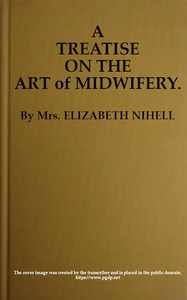
A Treatise on the Art of Midwifery by Elizabeth Nihell
Published in 1760, Elizabeth Nihell's A Treatise on the Art of Midwifery is a fiery defense of traditional, female-led childbirth practices. The 'story' here isn't a narrative with characters, but a real-life professional clash. Nihell, a midwife with decades of hands-on experience, watched as male surgeons—often called 'man-midwives'—began to enter the field. They brought with them a new tool: the obstetric forceps. These instruments were often used unnecessarily and dangerously by men who lacked the practical, bedside knowledge that midwives possessed.
The Story
Nihell's book is her direct counter-attack. She lays out her argument point by point. She details the skills of the experienced midwife: the careful touch, the patience, the deep understanding of the natural process. Then, she contrasts this with what she saw as the rushed, intervention-happy, and often brutal methods of the male practitioners. She didn't just criticize; she provided case studies and practical advice, advocating for a return to trust in women's bodies and the skilled hands of trained midwives. The central conflict is clear: nature and experience versus forced intervention and theoretical learning.
Why You Should Read It
This book is a revelation. Nihell's voice is sharp, witty, and utterly confident. You can feel her frustration and her passion leaping off the page. Reading it today, it feels shockingly contemporary. It’s about who gets to control women's healthcare, the dismissal of female expertise, and the dangers of prioritizing technology over human touch. It’s also a powerful piece of women's history, written by a working woman in a man's world. She wasn't an aristocrat writing letters; she was a professional defending her livelihood and the safety of her patients.
Final Verdict
This is a must-read for anyone interested in medical history, women's studies, or just a gripping real-life underdog story. It's perfect for history buffs who want to go beyond kings and battles, for anyone curious about the roots of modern obstetrics, and for readers who love discovering strong, forgotten voices from the past. Be warned: it's an 18th-century medical text, so some passages are technical. But push through—the force of Nihell's personality and the relevance of her fight make it absolutely worth your time.
This is a copyright-free edition. Preserving history for future generations.
Christopher Davis
1 year agoAfter spending a few days with this digital edition, the quality of the diagrams and illustrations (if applicable) is top-notch. It’s a comprehensive resource that doesn't feel bloated.
Joseph Moore
5 months agoI took detailed notes while reading through the chapters and the attention to detail regarding the core terminology is flawless. Simple, effective, and authoritative – what else could you ask for?
Emily Davis
1 year agoIt took me a while to process the complex ideas here, but the transition between theoretical knowledge and practical application is seamless. Finally, a source that prioritizes accuracy over hype.
Mary Perez
1 year agoThe research depth is palpable from the very first chapter.







Linda Williams
1 year agoBefore I started my latest project, I read this and the structural organization allows for quick referencing of key points. I'm genuinely impressed by the quality of this digital edition.