About 466 minutes
The Man Upstairs and Other Stories — Key Ideas to Explore
Adventure Picaresque Fiction
107,076 recorded words. 87 minutes difference from this book's estimate.
View Gutenberg source #6768
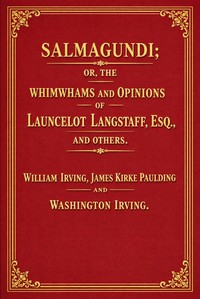
The source record for Salmagundi — Inside the Classic measures this digital text at 126,971 words, 9 hr 13 min estimated reading time, and 26 detected text sections.
The text analysis averages about 35.0 words per sentence, while the detected sections provide another way to judge how the source is divided.
Project Gutenberg metadata also associates the work with “American wit and humor,” connecting these edition facts with the source record’s subject description.
Explore this collection
These alternatives are selected using recorded categories and estimated reading time.
About 466 minutes
Adventure Picaresque Fiction
107,076 recorded words. 87 minutes difference from this book's estimate.
View Gutenberg source #6768About 411 minutes
Adventure Picaresque Fiction
94,489 recorded words. 142 minutes difference from this book's estimate.
View Gutenberg source #16126About 324 minutes
Adventure Picaresque Fiction
74,393 recorded words. 229 minutes difference from this book's estimate.
View Gutenberg source #65520Search stored excerpts and compare books → Choose by your preferences →
Choices use stored catalog measurements. Estimates vary with reading speed. A shared category is a catalog label, not a claim that two books have the same argument or literary quality.
Search reads excerpt text stored with this catalog and links to its associated Gutenberg record. The connection is stored in the site database; this tool does not recheck that every excerpt is word-for-word identical to that external record. Excerpt search does not cover every chapter and does not verify historical publication dates.
Catalog snapshot checked: 2026-09-26. Coverage: 100 public books, 100 available source excerpts.
Calculated from edition completeness, EPUB availability, text structure and catalogue metadata. Not a user rating.
Total of 100 points, scaled to a 2.5-5.0 range. Editions with an empty description or a missing EPUB file are not scored.
Public-domain source text
The source text is kept in the dedicated reader, separate from this catalogue record and its commentary.
Salmagundi opens with a mock-epic motto—"In hoc est hoax, cum quiz et jokesez"—that immediately signals its hybrid nature: part hoax, part quiz, part jest. The title itself, meaning a mixed dish, announces a collection of whims and opinions attributed to Launcelot Langstaff, Esq., and others. This collaborative work by Washington Irving, William Irving, and James Kirke Paulding was first issued in periodical numbers in 1807–1808, and the present edition includes an 1860 preface by Evert A. Duyckinck. The excerpts reveal a deliberate play of voices: the editor’s retrospective framing, the narrator’s affectionate yet ironic account of his uncle, and the underlying satirical intent aimed at New York society.
Duyckinck’s preface positions Salmagundi as a literary parent to Irving’s later works, calling it "the sport of his boyish days." He notes that Irving spoke of it lightly, yet Duyckinck insists on its merits, pointing to specific anticipations: a chapter on Gotham that foreshadows Knickerbocker, and traits of tenderness that prefigure the Sketch Book. This editorial framing creates a tension between the authors’ own dismissive attitude and the later critical valuation. The preface also reveals the collaborative nature: the book was published in Paulding’s series, and Irving did not revise it for his collected works. Duyckinck’s language—"fresh joyous period of youth"—emphasizes the work’s origins in a specific, fleeting moment of literary camaraderie.
The excerpt from the narrative presents a detailed portrait of the narrator’s uncle, a figure of rustic activity and sentimental reflection. The uncle’s speech is marked by a blend of practical energy—showing stone fences, a new cart, an Eclipse colt—and a melancholy awareness of mortality. His evening meditation, delivered with an arm resting on a fallen tree, contrasts the pastoral calm with his regret at parting from his farm. The narrator’s tone is affectionate but slightly ironic: he notes the uncle’s "villainous dance" through briers and his refusal to admit the narrator’s superior fishing skill. This interplay between the uncle’s earnestness and the narrator’s wry observation creates a layered perspective, typical of the work’s humor.
The full title—Salmagundi; or, The Whimwhams and Opinions of Launcelot Langstaff, Esq., and Others—announces a fictional editor and multiple contributors, a device that allows the authors to adopt various satirical personas. The motto, attributed to the pseudonymous "Psalmanazar," further blurs the line between real and invented authority. The work was originally published in twenty numbers, a format that encouraged topical commentary and shifting voices. In the excerpt, the narrator directly addresses the reader: "If my readers choose to accompany me in this expedition, they are welcome; if not, let them stay at home like lazy fellows." This direct address, combined with the mock-heroic invocation of "Daddy Neptune," shows how the periodical style enables a conversational, irreverent tone that undercuts its own sentimental passages.
Readers approaching Salmagundi should attend to the shifts in register between the editor’s scholarly apparatus, the narrator’s nostalgic set-pieces, and the satirical asides. The work rewards attention to its collaborative construction: which passages might belong to which author, and how the pseudonymous framework allows for a collective voice that is neither wholly earnest nor wholly ironic. The excerpts suggest a book that is both a period piece and a playful experiment in literary personae.
Reading again how Salmagundi’s masks let laughter soften a quiet ache, I found myself thinking of a different sort of layered voice, one that hides tenderness behind a shrug. There’s a similar warmth in The Man Upstairs and Other Stories — Key Ideas to Explore, where each narrator feels like an old friend half-remembered. That same gentle distance, I suppose.
Create a short personal record of your experience with this book.




![Cover of The three sisters [Night watches, Part 6.] — A Closer Reading](https://ujayu.com/storage/media/covers/pg12156.jpg)




